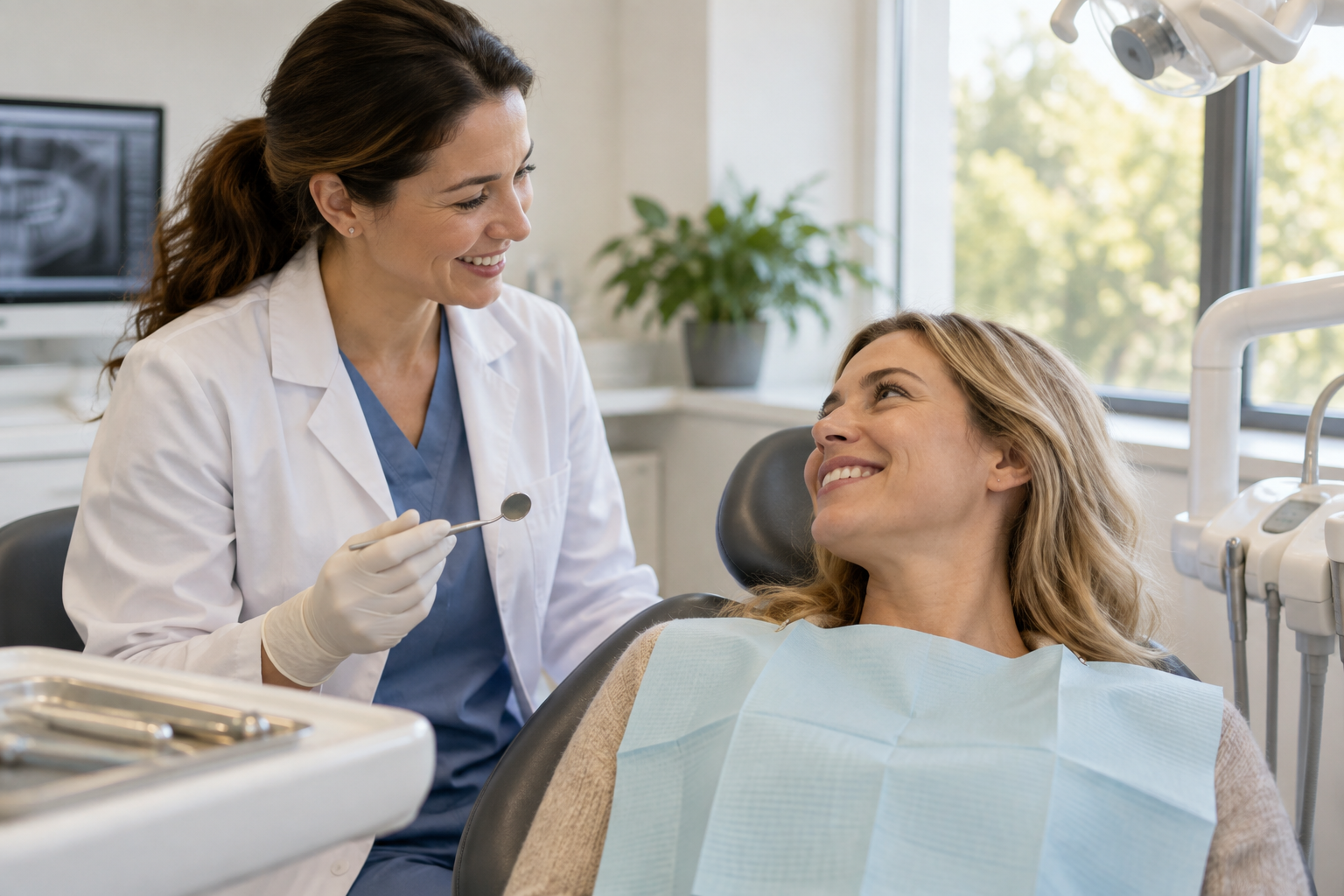
There is a stubborn old assumption that losing teeth is simply part of getting older. It isn’t. Plenty of our longtime patients are in their seventies and eighties with a full, healthy set of teeth — and the ones who are usually got there through steady, unglamorous maintenance rather than anything dramatic.
What is true is that mouths change with age, and the things worth watching in your sixties differ from what mattered in your thirties. Dr. Bridget Woodford and Dr. Alison Allin have cared for multiple generations of Chagrin Falls families, and this is a stage where a little attention pays off substantially.
What Actually Changes as You Get Older
Gums tend to recede. As gum tissue pulls back over the years, it exposes root surfaces that were never designed to be exposed. Roots have no enamel, which makes them more vulnerable to decay and often more sensitive to cold.
Enamel wears thin. Decades of chewing, brushing, and acidic foods gradually thin the outer layer of your teeth. Thinner enamel means more sensitivity and slightly darker-looking teeth, since more of the yellower dentin underneath shows through.
Old dental work reaches the end of its life. Fillings, crowns, and bridges are durable but not permanent. A filling placed thirty years ago may be developing tiny margins where bacteria can slip underneath. This is one of the biggest reasons regular exams matter more, not less, as you age.
Saliva often decreases — usually as a side effect of medications rather than age itself. Less saliva means less natural protection against decay.
Nerves inside teeth become less sensitive. This one catches people off guard: a cavity that would have hurt at forty may cause no pain at seventy, and can grow surprisingly large before you notice. Silent problems are exactly what exams are designed to find.
The Habits That Matter Most Now
The fundamentals do not change much, but a few adjustments help:
- Use a soft-bristled or electric toothbrush. Firm bristles and heavy pressure accelerate gum recession. If your bristles splay out quickly, you are pressing too hard.
- Clean between your teeth every day. If floss has become awkward to handle, interdental brushes, floss picks, or a water flosser work well — arthritis in the hands is a real obstacle, and there is no reason to fight it.
- Ask about a higher-fluoride toothpaste. Prescription-strength fluoride is one of the most effective tools we have against root-surface cavities.
- Stay hydrated, especially if you take medications that dry your mouth.
- Keep your regular visits, and let us know if we should see you more often. Some patients do best at three- or four-month intervals.
- Tell us about every medication and supplement, including over-the-counter ones. It changes what we look for.
Gum Health Deserves Extra Attention
Gum disease becomes more common with age, and it is not just a dental concern — research has consistently linked it to heart disease, diabetes, and other systemic conditions. It is also mostly painless in its early stages, which is precisely what makes it dangerous.
Watch for gums that bleed when you brush, persistent bad breath, gums pulling away from teeth, or any looseness in a tooth. Caught early, gum disease is very manageable; caught late, treatment becomes more involved. Our periodontal treatment is built around catching it early and keeping it under control.
When Teeth Do Need Replacing
Sometimes, despite everyone’s best efforts, a tooth cannot be saved. That is not a failure — it is a fork in the road, and there are good options at that point. Depending on your situation, your health, and what you want, we may talk about a crown, a bridge, a partial denture, or an implant restoration. Each has real trade-offs in cost, longevity, and how it feels day to day.
What we will not do is push you toward the most involved option because it is available. Dr. Woodford and Dr. Allin will lay out the choices plainly, tell you what we would suggest and why, and give you time to think about it. Our approach to restorative care is about restoring comfortable, confident function — not selling procedures.
A Word About Comfort
If it has been years since your last visit, you would not be the first patient to feel a little sheepish about that. Please don’t. We have heard every version of the story, and nobody in our office is going to lecture you. We would far rather see you now than have you wait another two years out of embarrassment.
Our office is quiet and unhurried by design. If you need extra time, more breaks, or a slower explanation of what we are doing, just say so.
Come See Us
Families across Chagrin Falls, Bainbridge, Auburn, Solon, Twinsburg, Aurora, and Moreland Hills have trusted Integrity Dental Group for more than 50 years, and our approach hasn’t changed: quality dentistry, gentle care, and no rushing.
If you are due for a visit — or overdue — call us at (440) 708-0900 or stop by 16716 Chillicothe Rd #700 in Chagrin Falls. We are open Monday through Thursday, and we would be glad to see you.
Ready to Schedule Your Visit?
The team at Integrity Dental Group is here to help. Call us at (440) 708-0900 or book online.
Book an Appointment