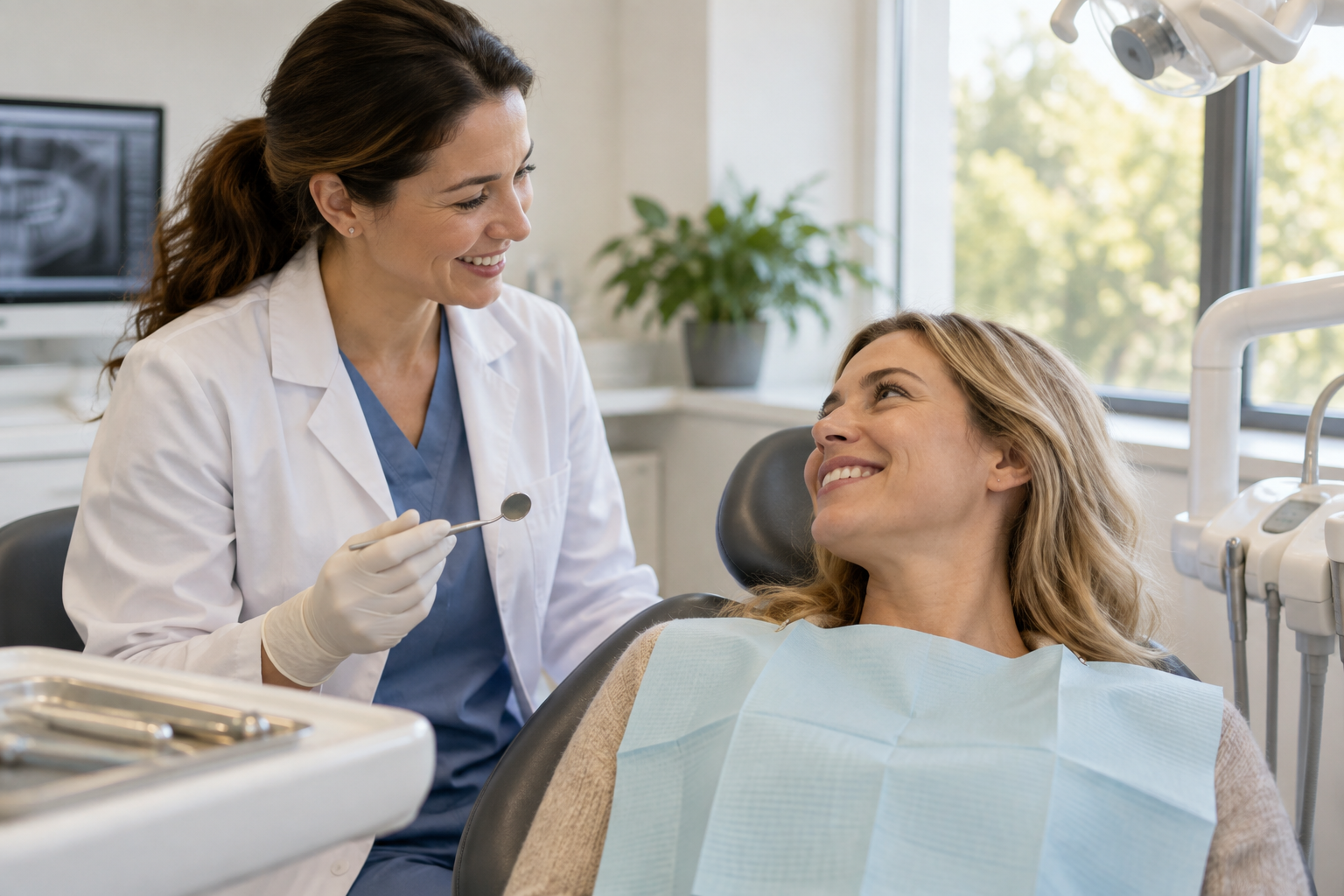
A dry mouth sounds like a minor annoyance — the kind of thing you mention to no one and solve with a glass of water. But when dryness becomes constant, it stops being a comfort issue and becomes a dental one. Saliva is one of the hardest-working parts of your mouth, and when there isn’t enough of it, cavities and gum problems tend to follow.
At Integrity Dental Group, Dr. Bridget Woodford and Dr. Alison Allin see this often, and it is frequently the patient who mentions it last, almost as an afterthought. If your mouth feels dry most days, we would rather hear about it early.
What Saliva Actually Does for You
Most of us never think about saliva until it’s missing. It does far more than keep your mouth comfortable:
- Rinses away food and bacteria after you eat, before they have time to settle in
- Neutralizes acid produced by bacteria and by acidic foods and drinks
- Delivers minerals like calcium and phosphate that help repair early enamel damage
- Makes chewing, swallowing, and speaking easy — and keeps dentures fitting comfortably
- Helps you taste your food properly
When saliva flow drops, all of that protection drops with it. That is why chronic dry mouth so often shows up in our chairs as a sudden cluster of new cavities in someone who has gone years without one — frequently along the gumline, where saliva normally does its best work.
Common Reasons Your Mouth Goes Dry
Dry mouth is a symptom rather than a diagnosis, so the useful question is always what is causing it. In our experience, a few causes come up again and again.
Medications. This is by far the most common one. Hundreds of everyday prescriptions and over-the-counter drugs list dry mouth as a side effect — antihistamines, blood pressure medications, antidepressants, muscle relaxants, and treatments for overactive bladder among them. If you started a new medication and noticed dryness within a few weeks, that timing is worth mentioning to us and to your physician.
Dehydration. Simple, and easy to overlook. Hot Ohio summers, heavy exercise, and a day powered mostly by coffee all reduce saliva.
Mouth breathing and snoring. If you wake with a mouth that feels like paper, breathing through your mouth overnight may be the reason. This one sometimes overlaps with sleep-disordered breathing, which is worth evaluating for its own sake.
Caffeine, alcohol, and tobacco. All three dry the mouth, and alcohol-based mouthwashes can make things worse rather than better.
Medical conditions and treatments. Diabetes, certain autoimmune conditions, and radiation therapy involving the head or neck can all reduce saliva production significantly.
Age-related changes. Age alone is a smaller factor than people assume — but older adults take more medications on average, and that is where the real connection lies.
What Genuinely Helps
The honest answer is that treatment depends on the cause, and there is no single product that fixes every case. That said, some approaches consistently help:
- Sip water throughout the day rather than drinking a lot at once. Frequent small sips do more for comfort than an occasional large glass.
- Chew sugar-free gum, especially gum containing xylitol. Chewing stimulates saliva flow, and xylitol is not fermentable by cavity-causing bacteria.
- Choose an alcohol-free mouth rinse, and look for products made specifically for dry mouth.
- Run a humidifier in the bedroom if you wake up dry.
- Ease up on caffeine and alcohol, particularly in the evening.
- Ask about a prescription-strength fluoride toothpaste. When saliva isn’t protecting your enamel, extra fluoride helps take up the slack. This is one of the most effective steps we can offer.
- Review your medications with your prescribing doctor. Sometimes a dose adjustment or an alternative is possible — never stop a medication on your own.
We may also recommend seeing you more often than twice a year. If your cavity risk has gone up, shorter intervals between visits let us catch problems while they are still small and inexpensive to fix. That kind of adjustment is exactly what preventive care is for.
When to Bring It Up With Us
Mention it at your next visit if dryness has lasted more than a couple of weeks, if you are waking up dry every morning, or if you have noticed a burning sensation, cracked lips, difficulty swallowing dry foods, or a change in taste. Any of those tells us something worth investigating.
And if you have developed new cavities recently and cannot explain why, dry mouth belongs high on the list of suspects. We would rather chase down the cause than treat one filling after another without asking why they keep appearing.
We’re Here to Help You Get Comfortable
Patients come to us from Chagrin Falls, Bainbridge, Solon, Twinsburg, Aurora, Auburn, and Moreland Hills, and this is one of those problems where a short conversation often leads to real relief. There is usually something we can do — and no reason to keep quietly putting up with it.
Integrity Dental Group has looked after families here for more than 50 years, with the same approach throughout: quality dentistry, gentle care, and never any rushing. If your mouth has been feeling dry, call us at (440) 708-0900 or visit our office at 16716 Chillicothe Rd #700 in Chagrin Falls. We are open Monday through Thursday and would be glad to take a look.
Ready to Schedule Your Visit?
The team at Integrity Dental Group is here to help. Call us at (440) 708-0900 or book online.
Book an Appointment